
Guide
How to know if an elderly parent living alone is okay
 Silvie·5 min read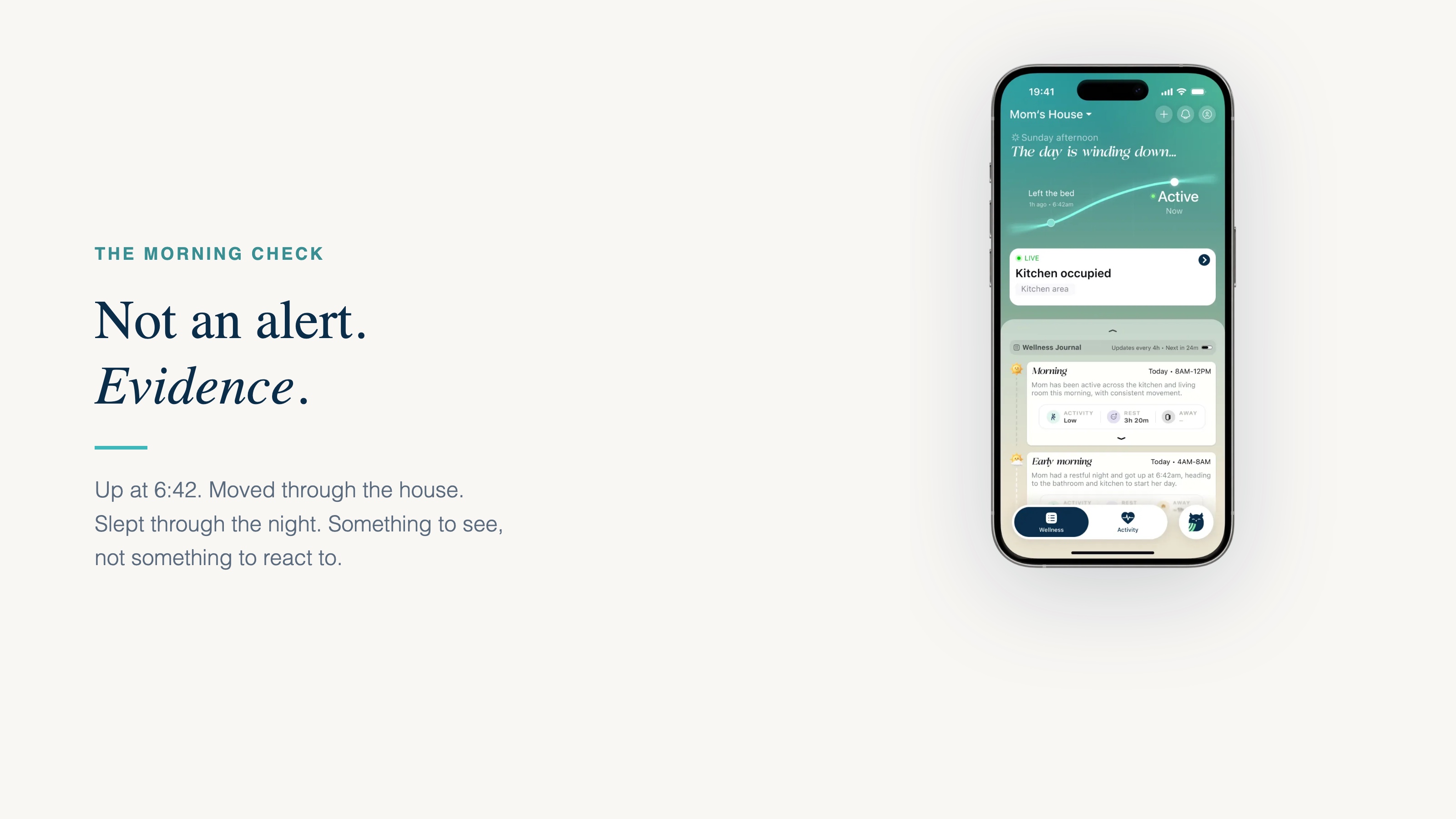
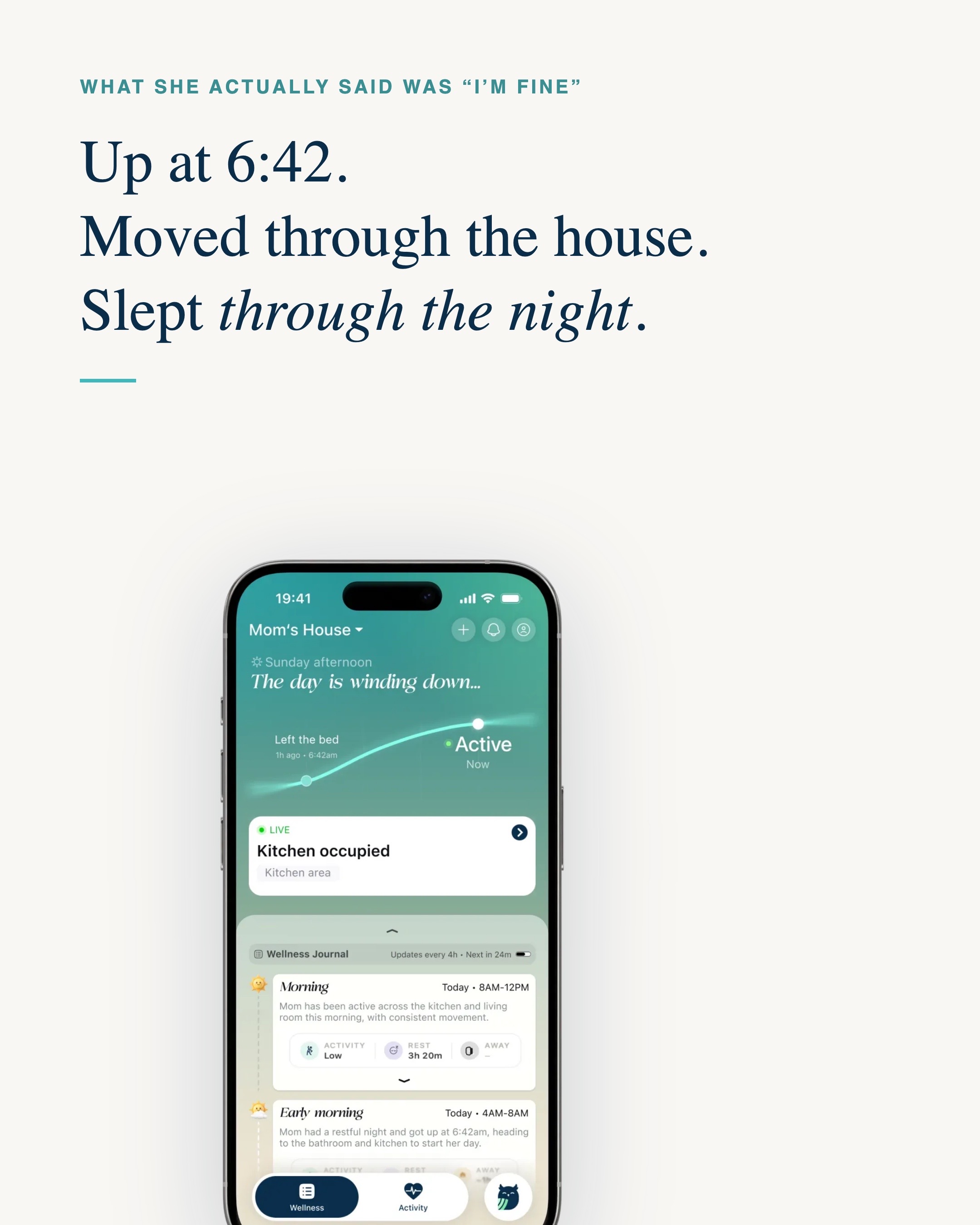
Short answer: a daily phone call tells you how your parent sounds, not how they are. The most reliable way to know an elderly parent living alone is okay is to look for three ordinary signals every morning: did they get out of bed, have they moved around the home, and did they sleep without incident. You can gather all three without a camera and without asking them to wear anything.
For years the morning call was the same. Are you okay? I'm fine. And you hang up not really knowing.
Fine is not information. Fine is what our parents say so we won't worry. It carries love, and pride, and sometimes a fall from last Tuesday that nobody mentioned.
Why the daily phone call isn't enough
A check-in call measures one thing: whether your parent can answer the phone and sound normal for ninety seconds. It misses the slow changes that actually predict trouble, and it puts the burden of honesty on the person with the most reason to downplay things. If your parent has ever downplayed a fall, you already know the gap.
The three signals that actually tell you something
- Did they get up? A normal wake time, and getting out of bed at all, is the single strongest daily signal. A parent still in bed at 11am when they always rise at 7 is worth a call.
- Have they moved through the home? Movement between rooms (bedroom to bathroom to kitchen) shows function, not just presence.
- Did they sleep without incident? Restless nights, long periods awake, or repeated bathroom trips often show up before a health change becomes visible.
Ways to check in, and what each one misses
- Daily phone call. Free and human. Misses everything between calls, and relies on self-reporting.
- Medical alert button. Useful if pressed. A button only works when the person can press it, which excludes many of the moments families worry about most. See medical alert or home sensor.
- Wearables. Only work if charged nightly and worn daily. In practice they end up in the drawer.
- Cameras. Comprehensive and widely rejected by the person being watched. Most older adults experience them as surveillance in their own home.
- Passive home sensors. Nothing to wear or charge, no images. Show activity and rest patterns rather than pictures. See how detection works without a camera.
Evidence instead of alerts
Most home safety technology is built around the alarm: something goes wrong, a signal fires. That model quietly fails a whole class of daily risk, the fall that is never detected and the slow decline that never trips a threshold. What wears families down is not the dramatic emergency. It is the not knowing on an ordinary morning.
The shift that helps is checking for evidence that today looks normal, rather than waiting to be alerted that it isn't. And it should be honest about its limits: no system catches everything, and a broken promise costs more trust than a modest one kept daily.
How to set this up without a fight
- Lead with what your parent keeps: their home, their routines, no overnight stranger, no camera.
- Show them exactly what you will see, on your phone, before anything is installed.
- Start with one change, not five. Add nothing else for a month.
- Agree on what you will do with what you see, so it never feels like being watched.
If the conversation itself is the hard part, talking to a parent who refuses help covers the sequencing in more detail. If you are doing this from another city, caring for a parent from far away is the companion piece.
Common questions
How often should I check on an elderly parent living alone?
Most families settle on a daily rhythm: one quick look at whether the morning looked normal, plus a real conversation a few times a week. The goal is to reduce the number of calls made out of worry rather than to increase them.
How can I check on my parent without a camera?
Passive home sensors report activity and rest (out of bed, moving between rooms, resting through the night) without capturing images or audio. Families see patterns and events rather than pictures, which is why older adults tend to accept them.
What are the warning signs that a parent can no longer live alone safely?
Common signals include getting up much later than usual, spending far more time in one room, disrupted nights, missed meals, and repeated falls that get explained away. A single odd day is normal; a sustained change in pattern is the thing to act on.
What if my parent refuses any monitoring?
Start from what they keep rather than what you gain: staying home, no overnight caregiver, no camera. Show them the exact information you would see. Adoption in these homes works when the older adult is choosing independence, not accepting decline.
No wearable, no camera
See how a small sensor gives your family a quiet way to know a parent is okay, without cameras or anything to charge.
Explore Silvie