
Guide
How to talk to a parent who refuses help
 Silvie Team·6 min read
You think something needs to change. Your parent says everything is fine. Many families get stuck at this point.
When a parent says no, it is usually not about the device. It helps to know what it is about.
What the resistance is really about
To you, a sensor means safety. To your parent, it can feel like a sign they are getting old and losing control. Each new device can feel like losing some independence. After a few, some parents say no to everything.
So don't try to win the argument. Let your parent stay in control of the decision, and still talk about the risk.
What tends to work
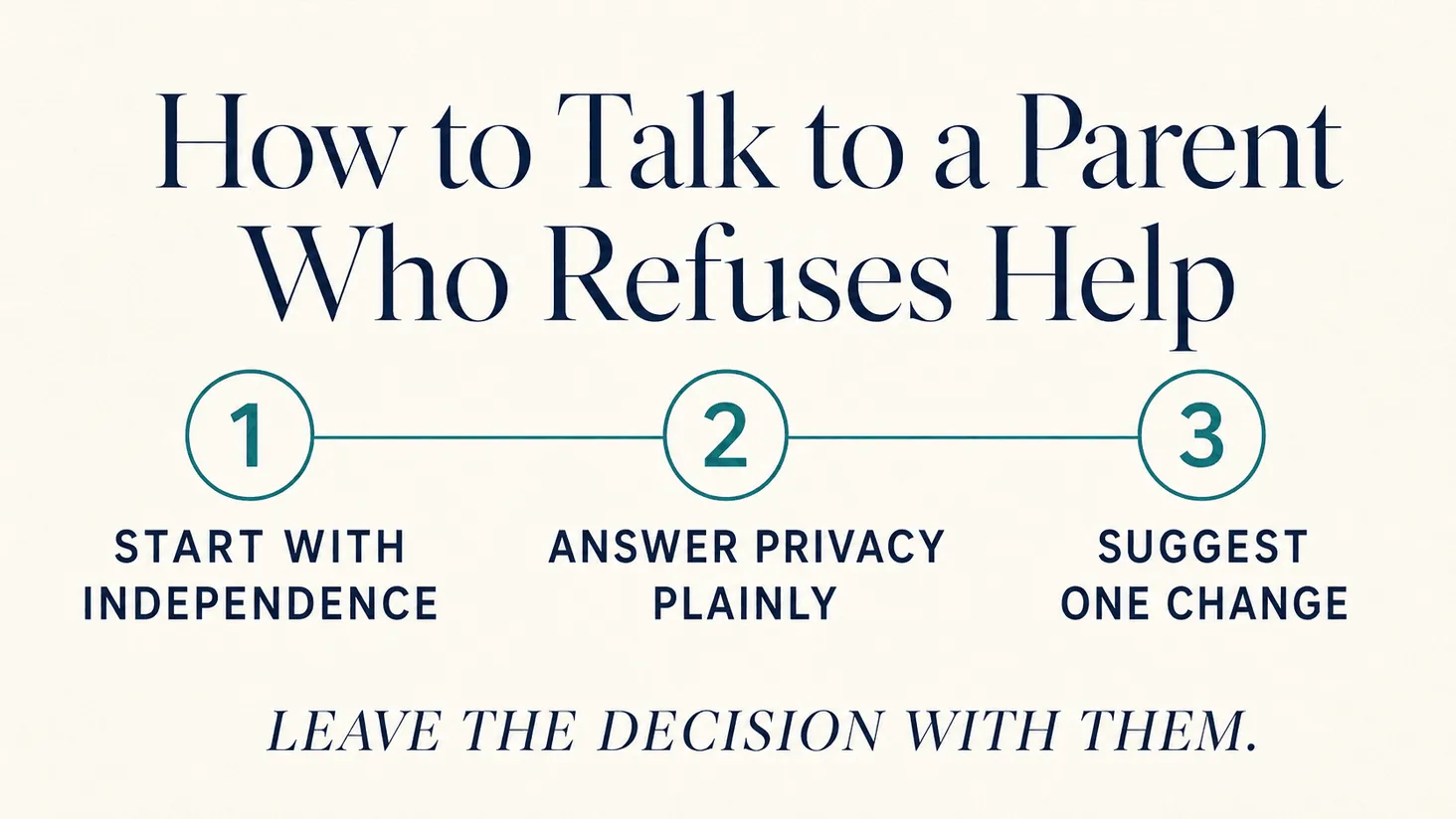
- Lead with their independence, not your worry. Don't tell them you need to keep an eye on them. Tell them it could help them stay in their own home. It is the same device, but it means something very different to your parent.
- Suggest, don't instruct. Your parent spent decades making the decisions. Being told what to do by their child feels bad. Suggest it and give them time.
- Go gently, and go more than once. This is rarely a single conversation. Bring it up, wait a few days, then bring it up again calmly.
- Don't stack changes. A new diagnosis, a new routine and three new gadgets at once is too much. Many parents will say no to all of it. One change at a time is easier to accept.
- Let the safety point stand on its own. If they say "I don't want the fuss," gently remind them what worries you: a fall with no one there.
The objection you can answer completely
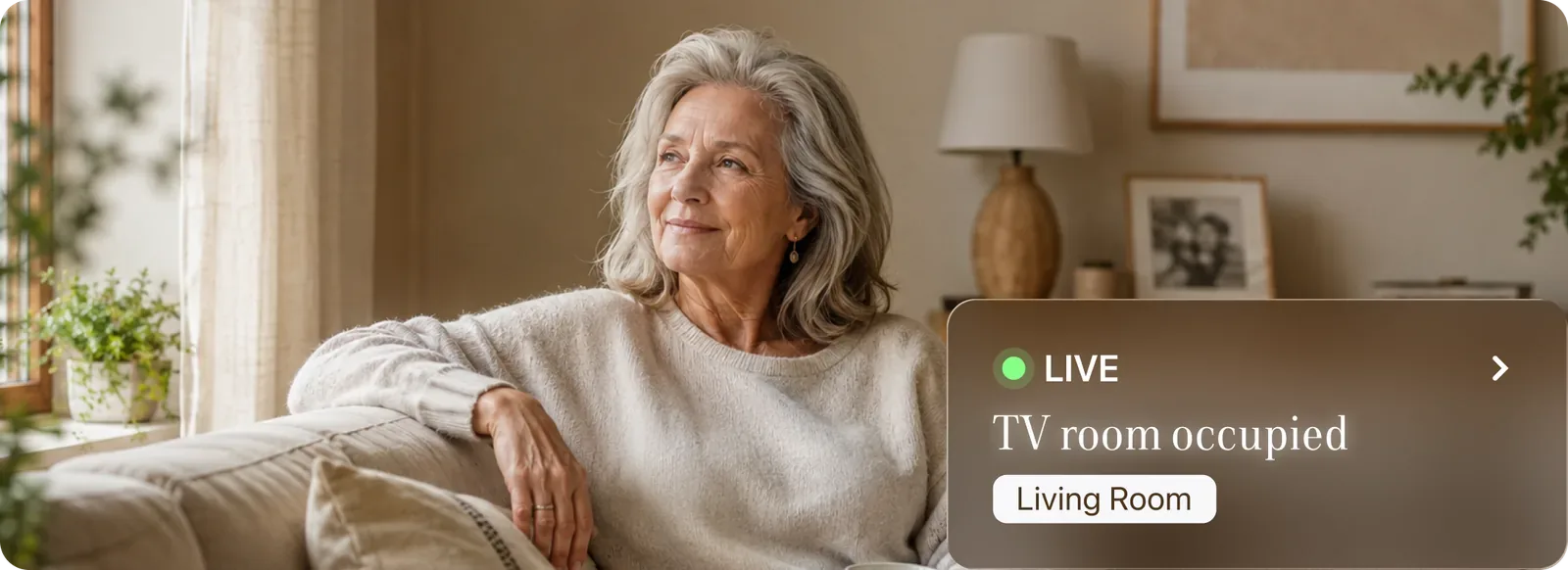
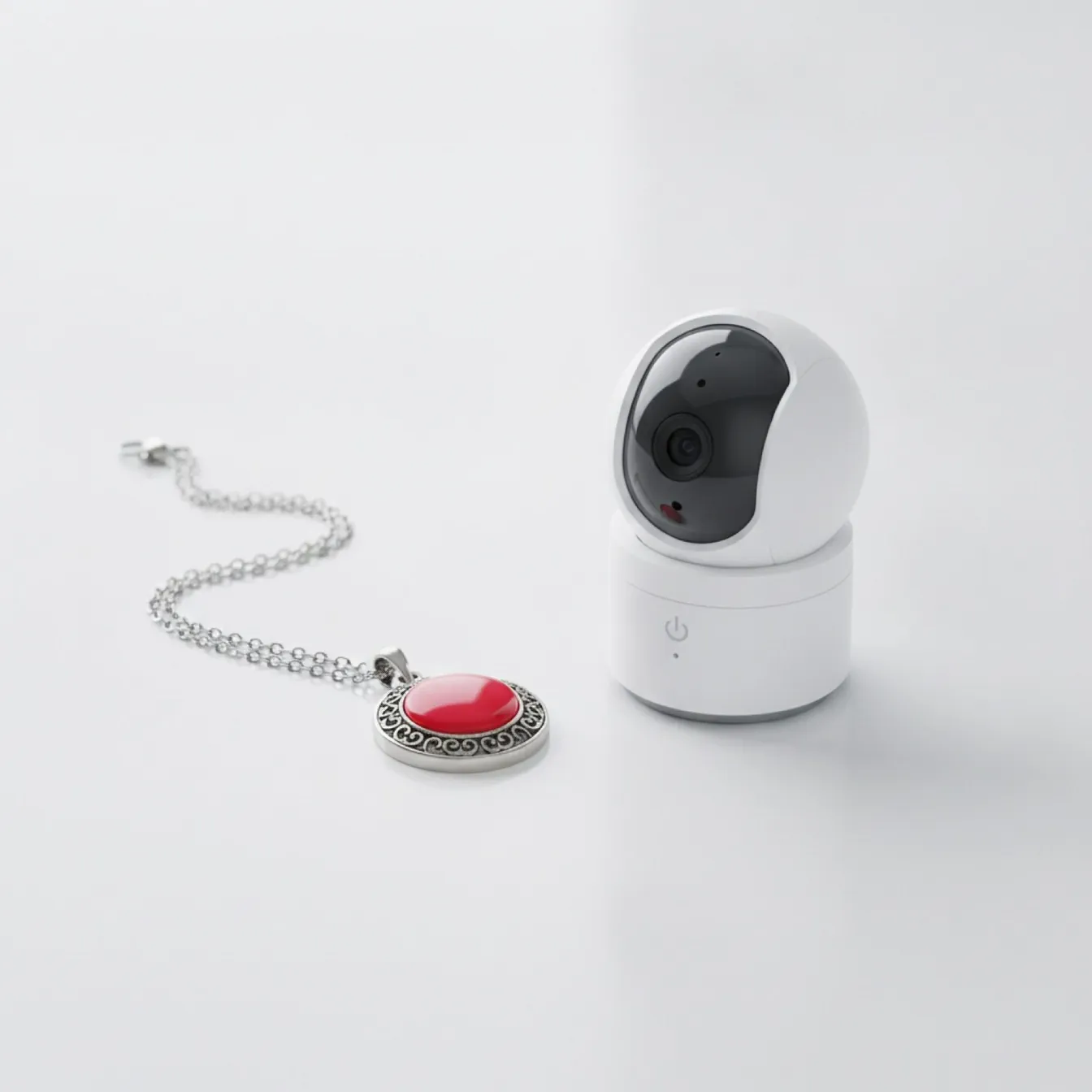
Many parents have one fear: am I being watched? Many relax once they know there is no camera.
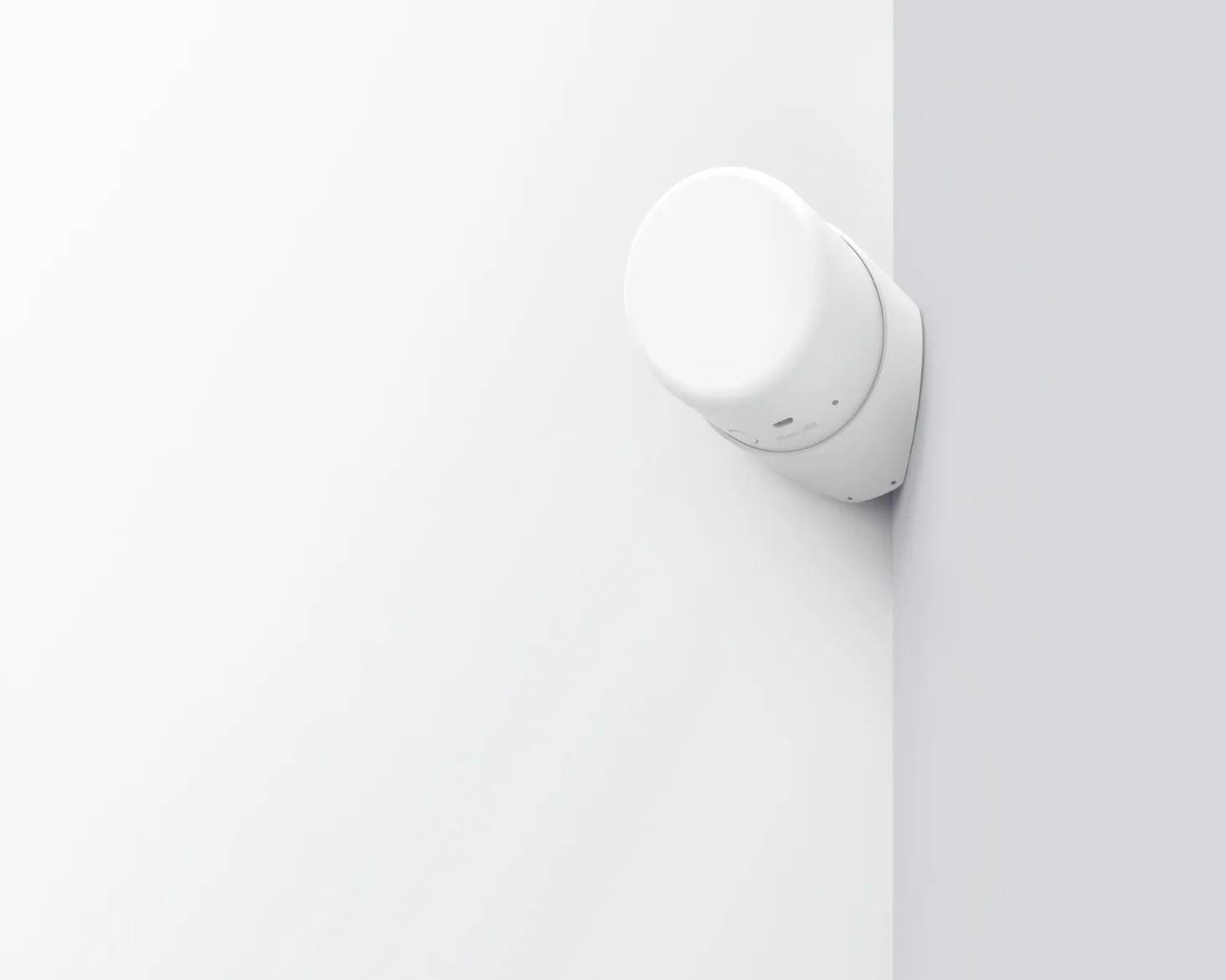
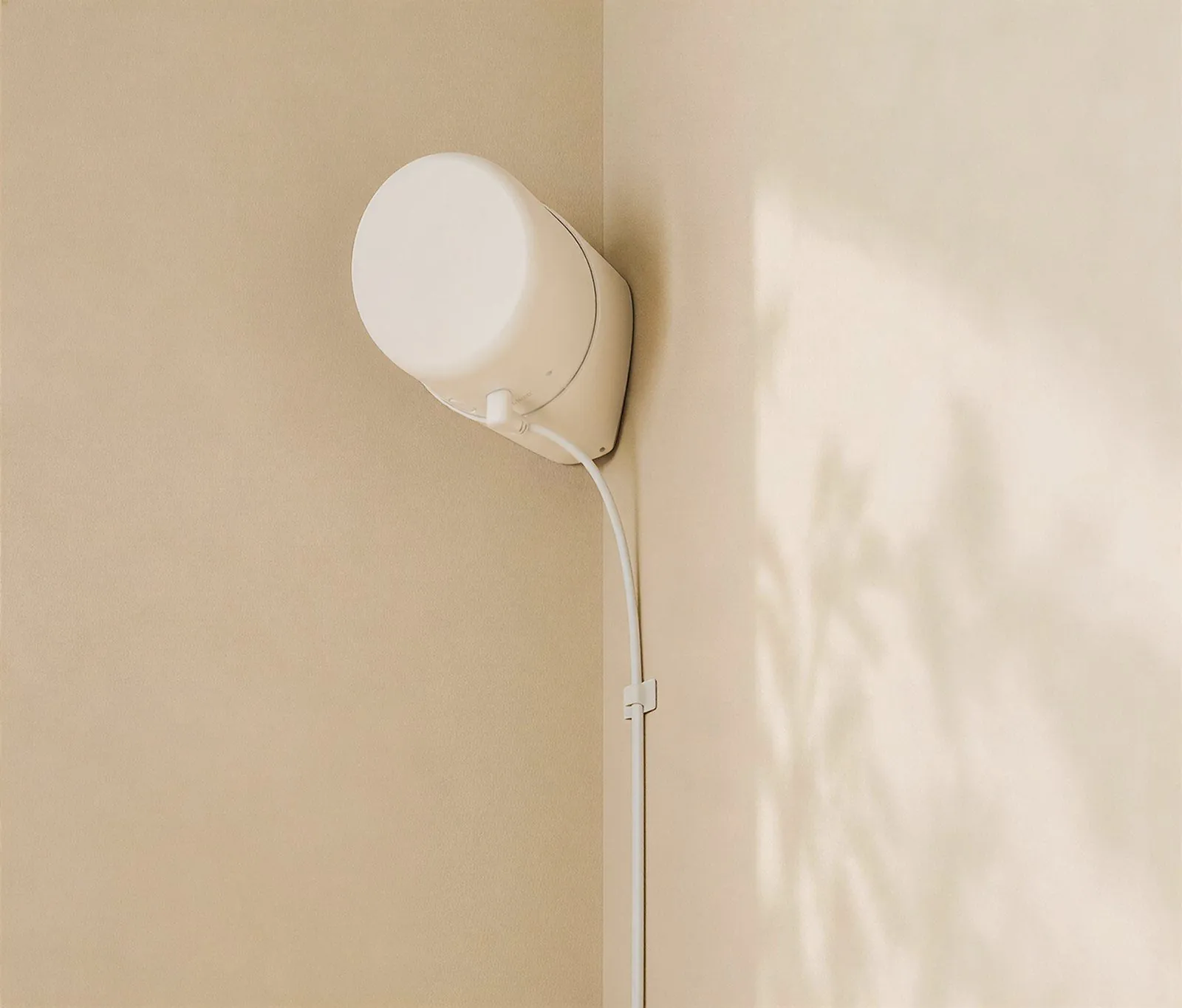
Silvie uses radar, not a camera, and no microphone. It detects when someone gets up or is resting in bed. You can also see their breathing rate while they sleep in the Silvie app. If it detects a fall, the people you invite get an alert in the app. It can miss falls, and it does not call 911. It cannot see or hear your parent. You can truthfully say, "There is no camera and no microphone. No one can see you." That can turn a hard no into a maybe.
You are not trying to win an argument. Let the choice be theirs. And tell them plainly that no one can see them.
Where Silvie fits
With Silvie, there is little for your parent to say no to. There is nothing to wear, charge or remember, and no camera in the room. That makes it easier to say yes.
Is my parent being watched?
The privacy question every family asks, and the honest answer about what radar can and can't see.
The pendant your parent won't wear
The alert button only works if it's worn. What covers the gap it leaves.

Aging in place technology: a family's guide
The four main options and their trade-offs, in one page.
Fall detection without a camera
How radar catches a fall with nothing to wear, and where pendants and watches fall short.
See how Silvie works
A small sensor on the wall that detects falls and shows daily activity. No cameras, no wearables.
Explore Silvie