
Story
The drawer
 Silvie Team·3 min read
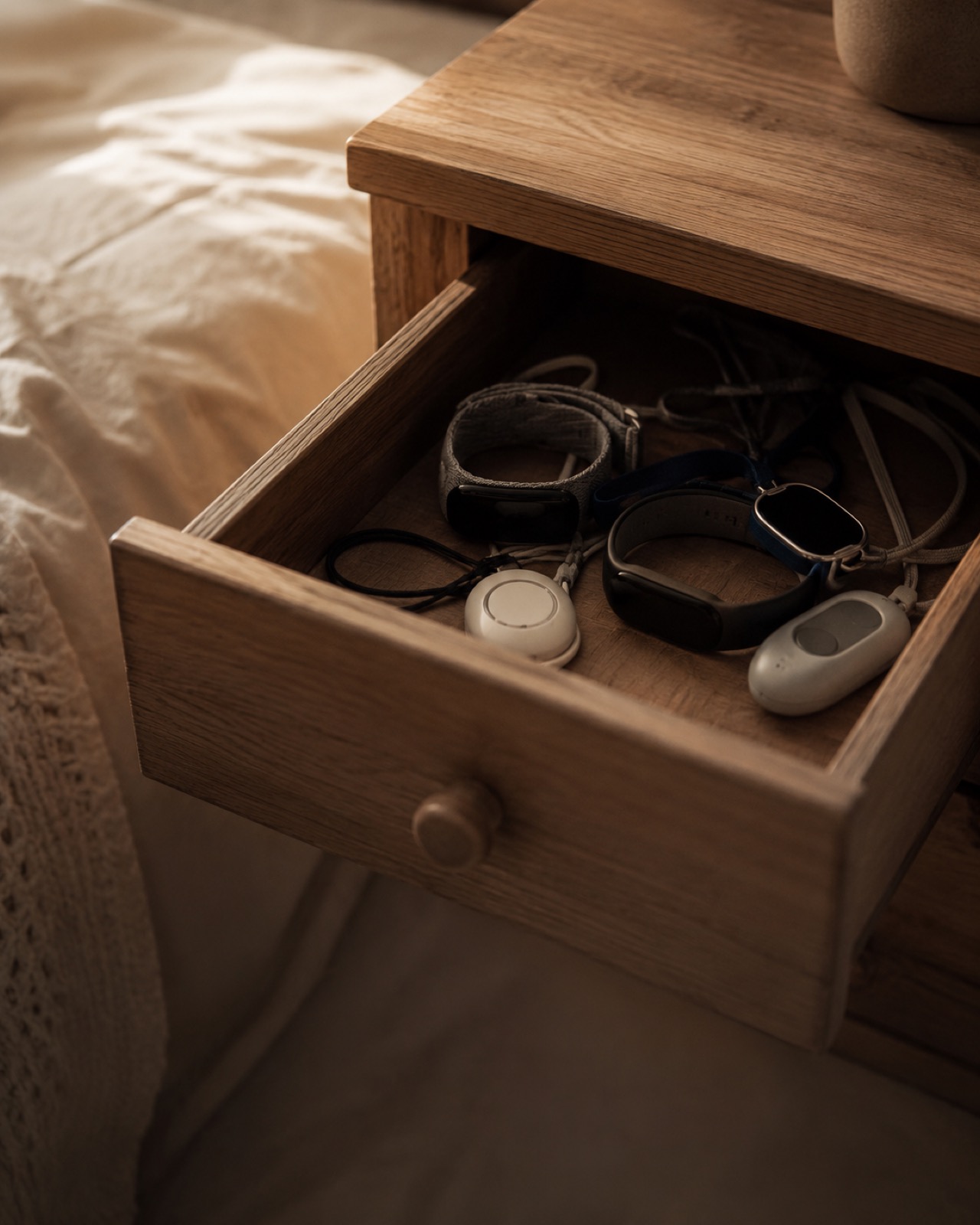
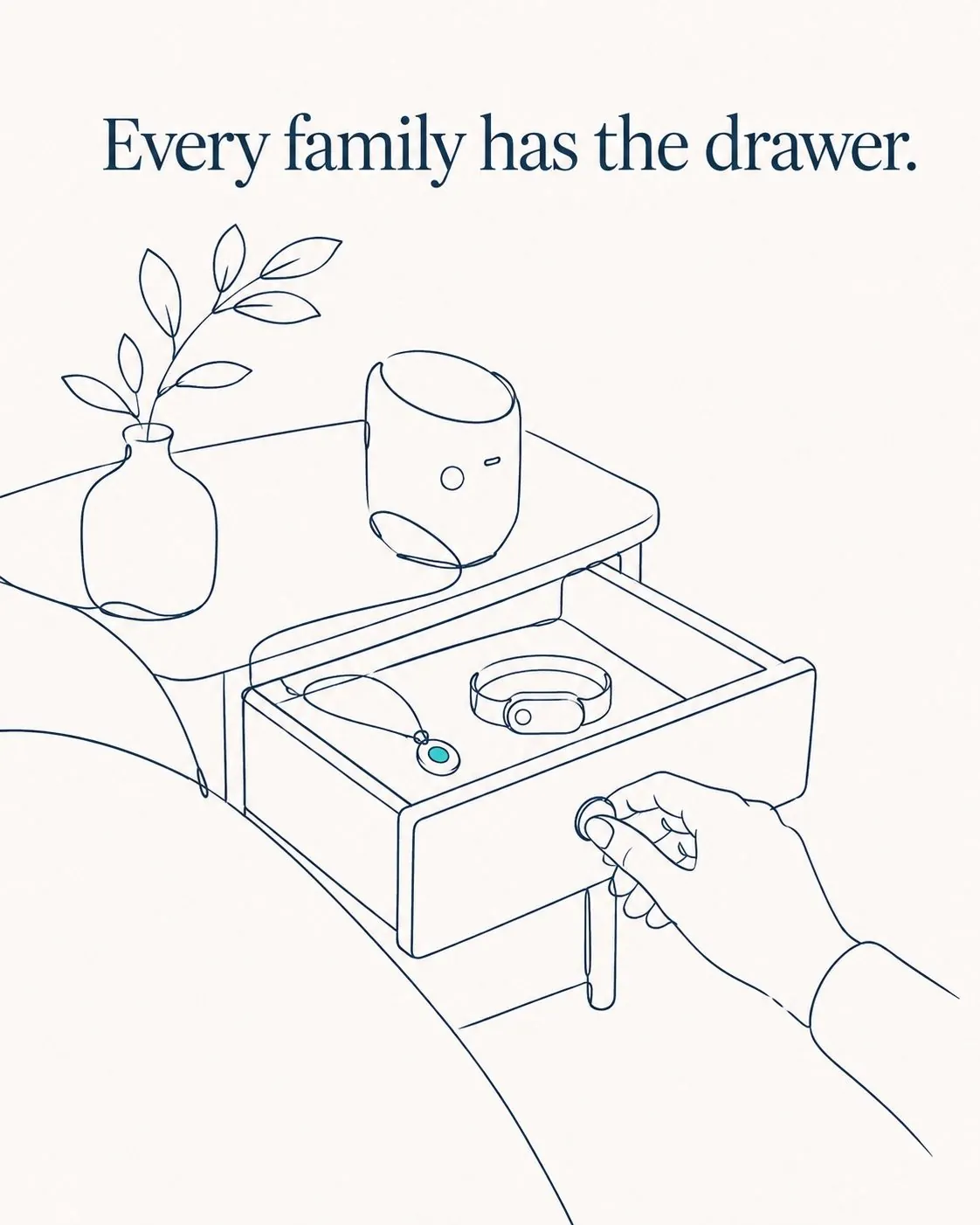
Many families caring for an older parent have tried a wearable: a pendant alarm, a fitness band, or a watch with fall detection. Many of these devices end up switched off in a drawer.
That does not mean the family did something wrong. It usually means the device asked too much of your parent every day.
Why wearables stop being used
A wearable only helps if your parent does two things every day:
- Charges it.
- Puts it back on, including after a shower and before bed.
Many parents also do not want to wear it. To them, it can feel like a sign that they are getting old.
Night is when this matters most. If the watch is charging next to the bed, it cannot detect a fall on the way to the bathroom.
Before you buy another device
Ask three questions:
- Does your parent have to wear, charge or press anything?
- Does it work at night and in the bathroom?
- Who gets the alert, and how?
How Silvie is different
Silvie is a small sensor on the wall. It uses radar, not a camera. Your parent does not wear, charge or press anything.
It detects falls. It also shows you their daily routine, like when they get up and go to bed. If it detects a fall, you get an alert in the Silvie app on your phone.

What Silvie does not do
No device catches everything. Silvie only covers the rooms where a sensor is installed. Alerts go to the Silvie app. Silvie does not call 911.
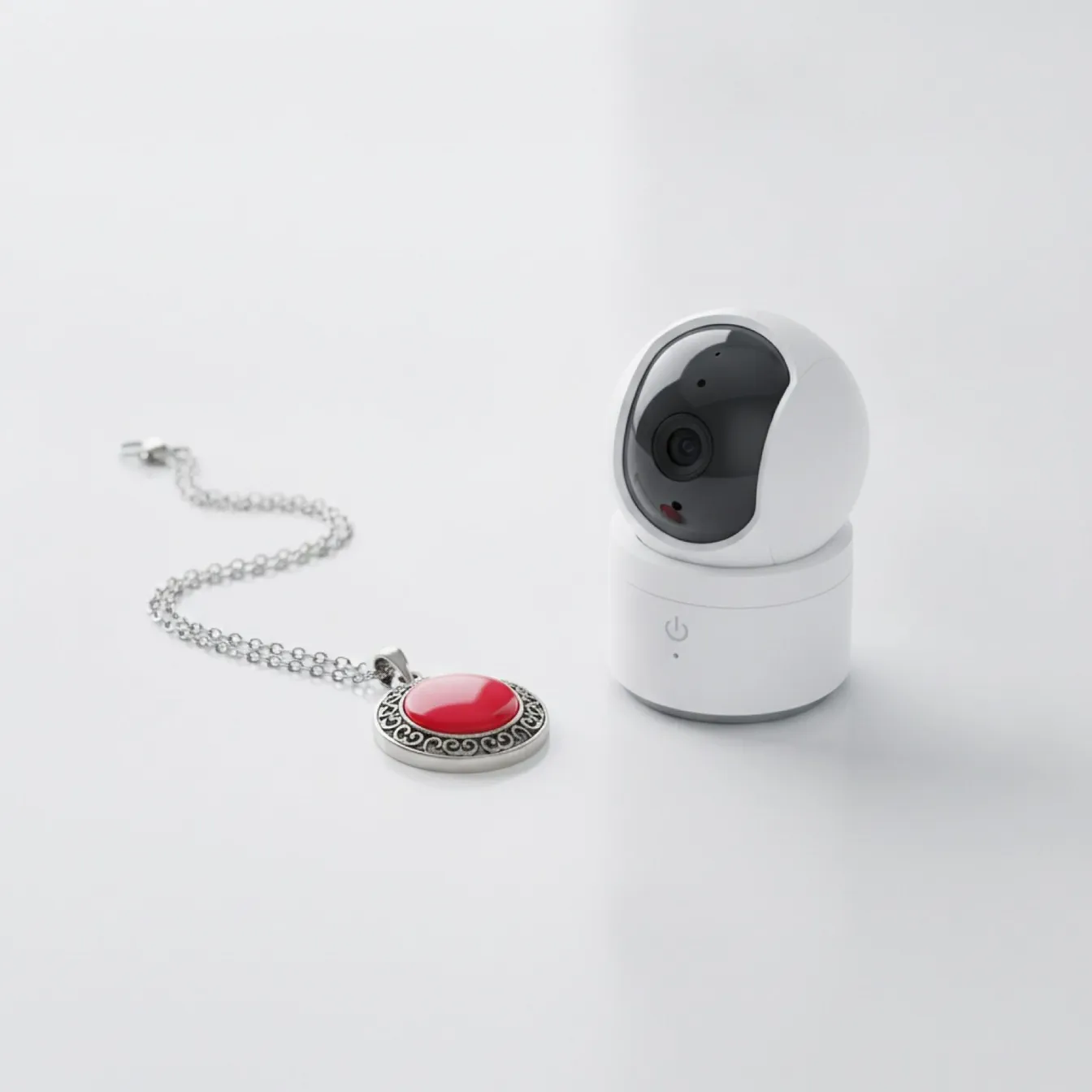
Fall detection without a camera
How radar catches a fall with nothing to wear, and where pendants and watches fall short.

Aging in place technology: a family's guide
The four main options and their trade-offs, in one page.
No wearable, no camera
See how Silvie works, with nothing for your parent to wear or charge.
Explore Silvie