
Guide
More than a fall alarm
 Silvie Team·5 min read
When families start looking for help for an aging parent, most ask for a fall alarm. That makes sense. A fall is what families worry about most.
But a few months in, families rarely mention the fall alarm. They talk about the daily updates instead.
What would you need to know each morning to feel sure your dad is okay?
Not just that the alarm stayed quiet. No alarm does not mean everything is fine. You would want to know he got out of bed, moved around the kitchen and slept through the night.
Why the alarm alone isn't enough
A fall alarm stays silent almost all the time. When it is silent, you cannot tell why. Did nothing happen? Did the device miss it? Is it even working? That is why families with only an alarm still call every morning to check.
A view of the daily routine is different. It answers the question you have each morning: is my parent okay today?
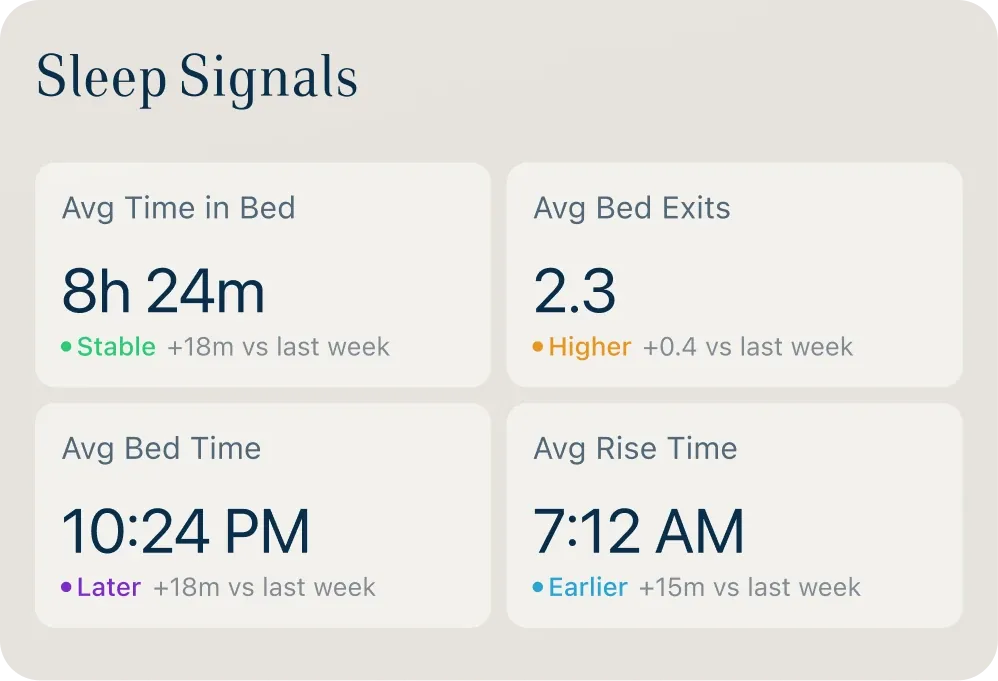
What an ordinary day looks like in the app
- They got up. They got out of bed in the morning, around the usual time.
- They're moving through the day. They move between rooms during the day.
- They slept. You can see when they went to bed and got up, and their breathing rate while they sleep. If the night was rough, you know before you call.
- Nothing changed. Today looked like a usual day for them.
None of this needs a camera. You see that they are up and moving, not what they are doing.
The fall alert is for emergencies. The daily view is what you check every day. A good system gives you both.
How Silvie does both
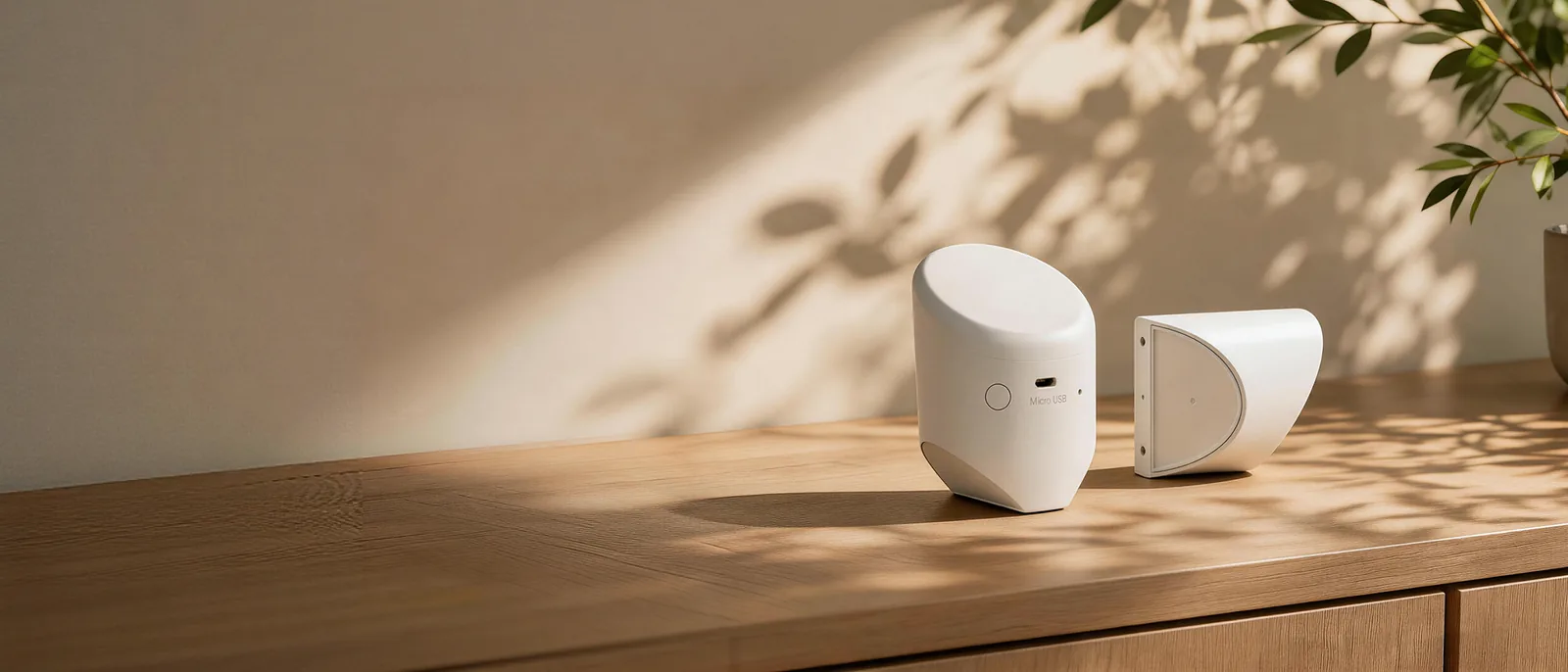
Silvie is a small sensor on the wall. It uses radar, not a camera. If it detects a fall, the people you invite get an alert in the Silvie app. It also shows their daily routine, like when they get up, move between rooms and go to bed. It can miss falls, and it covers only rooms with a sensor. Your parent has nothing to wear or charge.
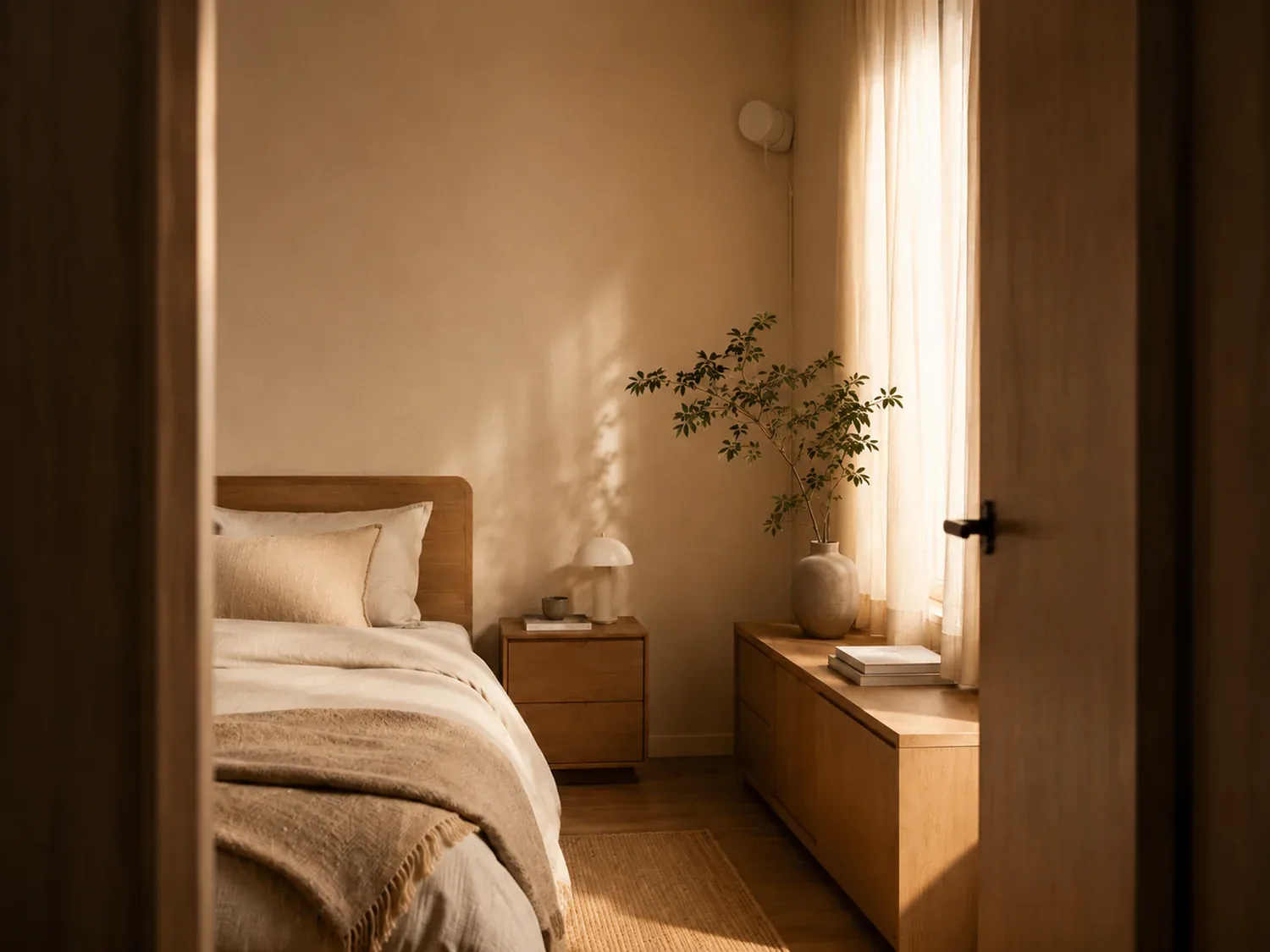
When a parent lives alone overnight
The hours you can't cover.
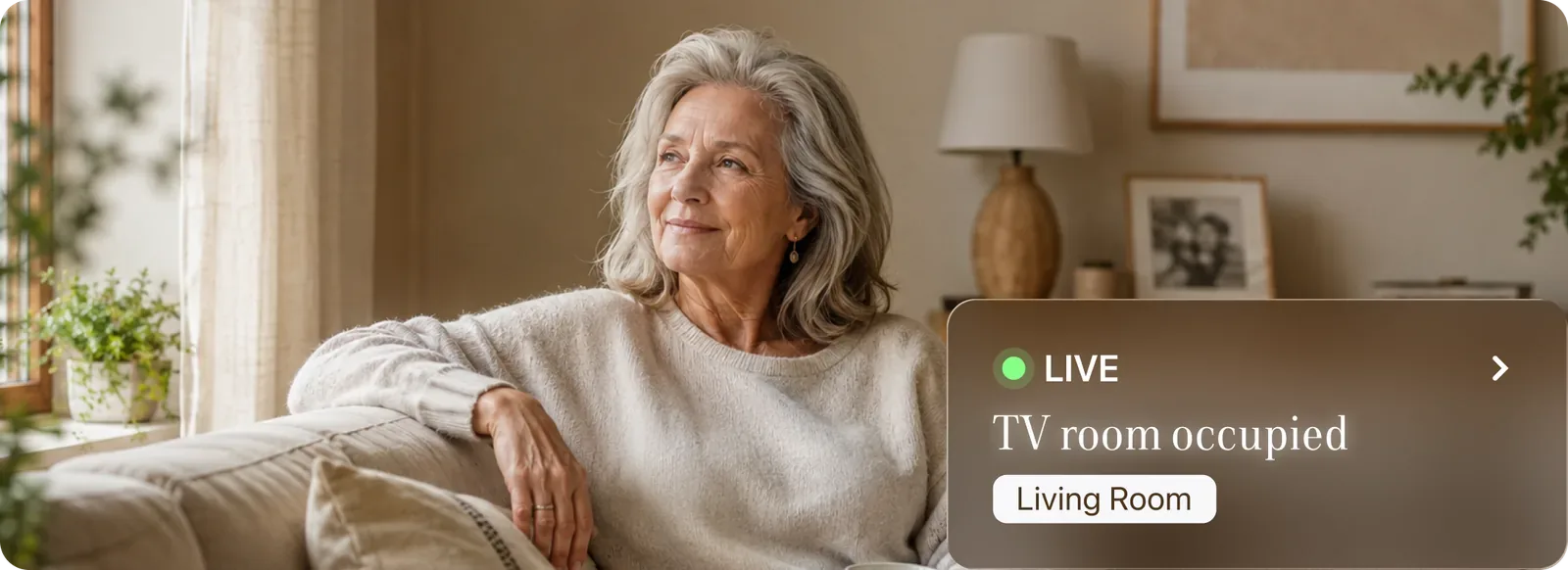
Is my parent being watched?
The privacy question every family asks, and the honest answer about what radar can and can't see.
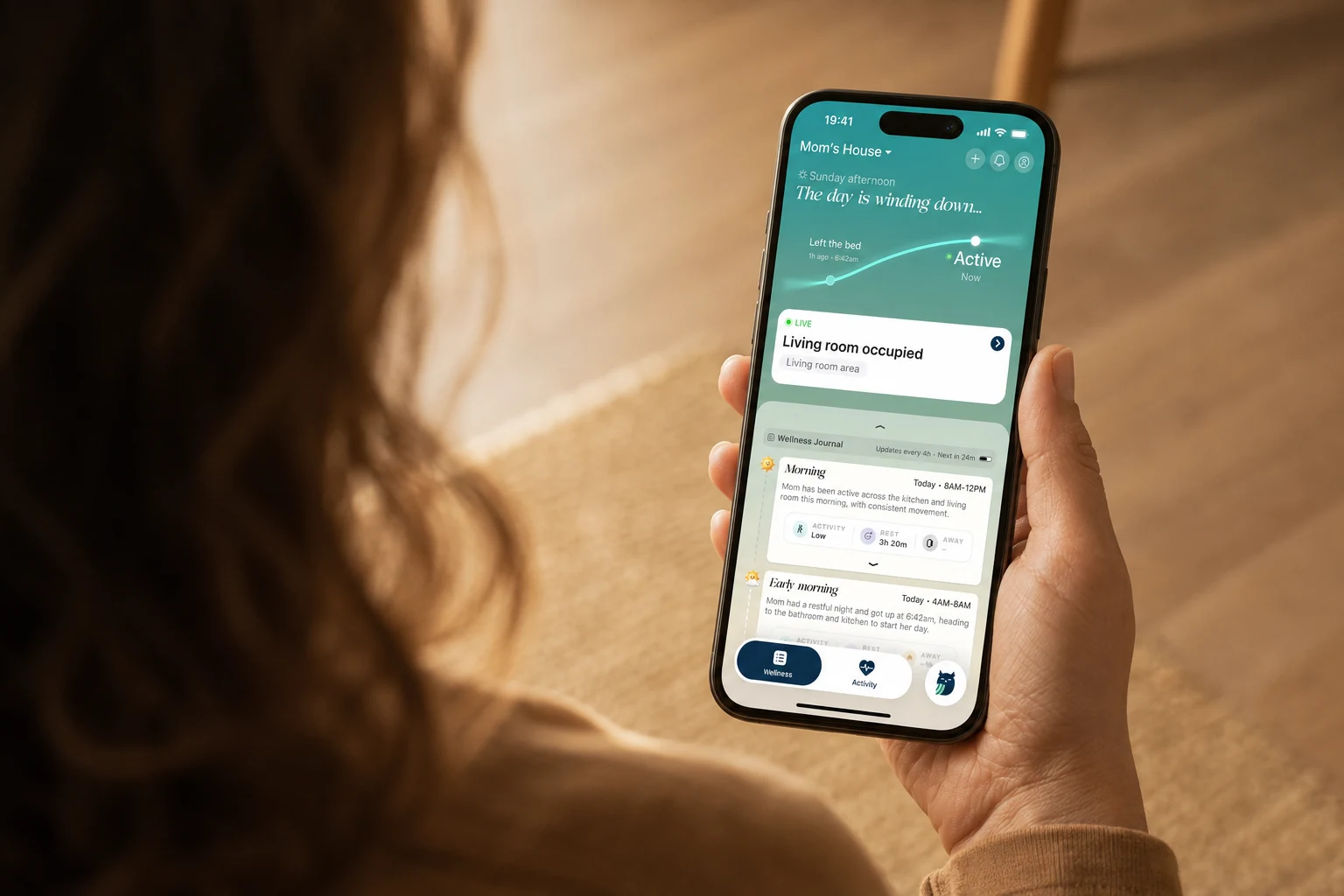
How to monitor an elderly parent remotely
Every way to stay aware from a distance, from daily calls to radar, and the privacy trade-off each one makes.
Radar vs camera for senior monitoring
The two technologies side by side, and where each belongs.
See how Silvie works
Fall detection plus a view of your parent's daily activity. No cameras, no wearables.
Explore Silvie