
Guide
Too many alerts is its own problem
 Silvie Team·5 min read
Too many false alerts is a real problem. One cause is normal movement flagged as a fall. After a few, families stop checking. Then they can miss a real one.
Why false alarms are a problem
Every false alarm makes the family trust the system a little less. Get a "fall detected" alert for the dog on the floor a few times, and you stop looking. Then the device is working, but it is not helping anyone.
If you learn to ignore alerts, they can't help you.

Alerting on the right things
The answer is fewer alerts, about the right things. There are two kinds of updates: the immediate (a fall) and the trend (activity, a pattern drifting). Daily activity can wait in the app until you look.
In the Silvie app, the people you invite can mark each fall alert True Fall, False Alarm or Not Sure. See what the app shows.
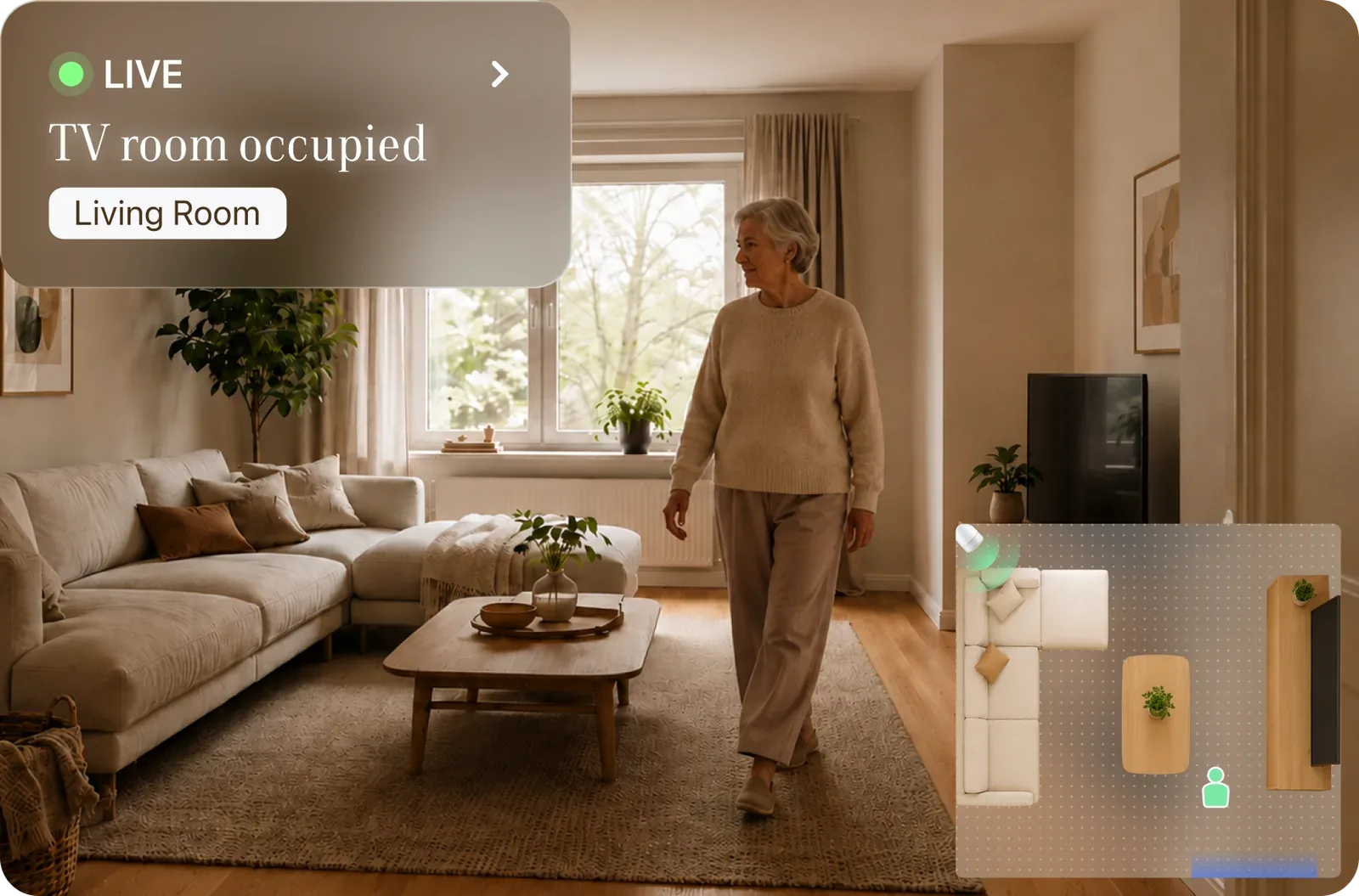
More than a fall alarm
A daily view of whether your parent is up and moving.
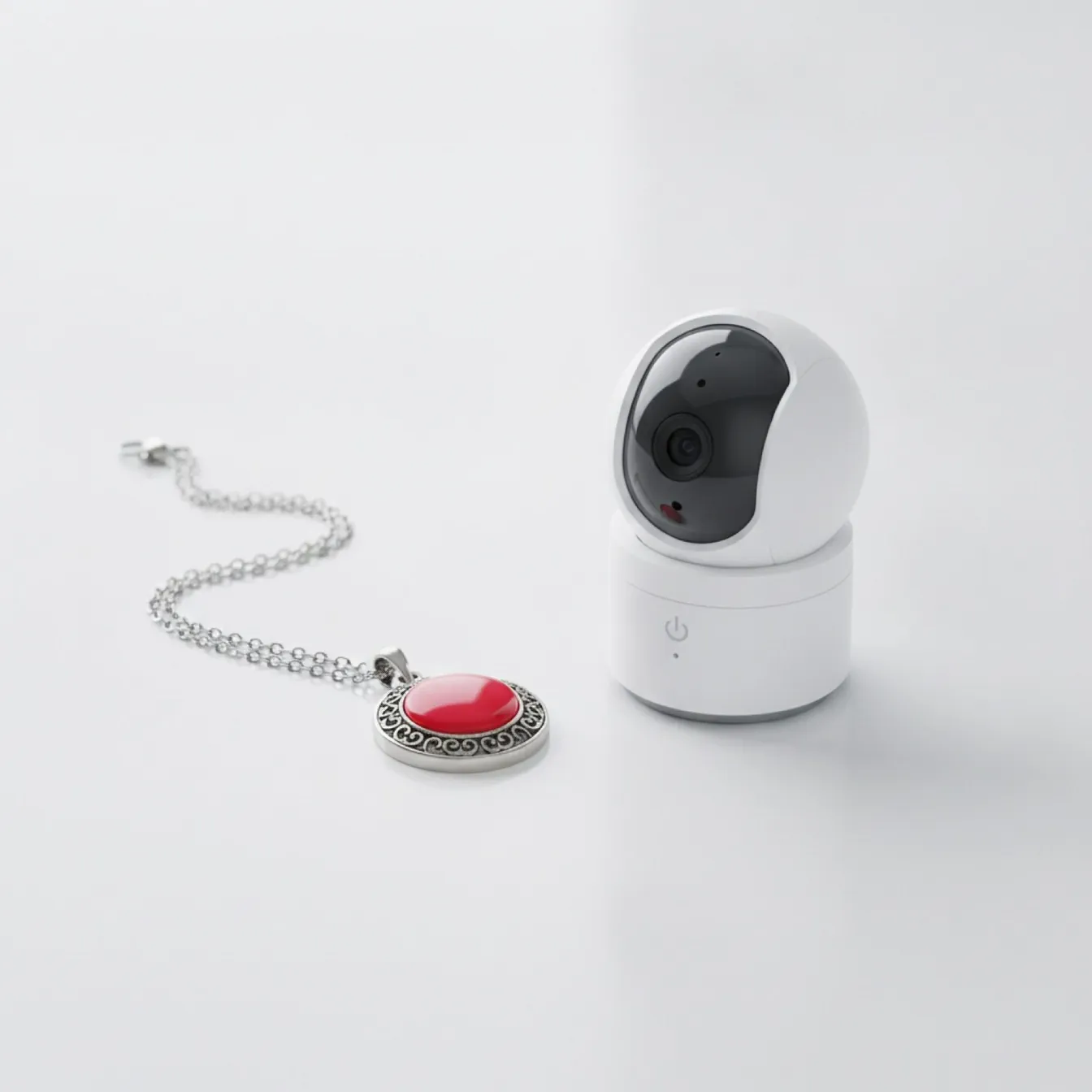
Fall detection without a camera
How radar catches a fall with nothing to wear.
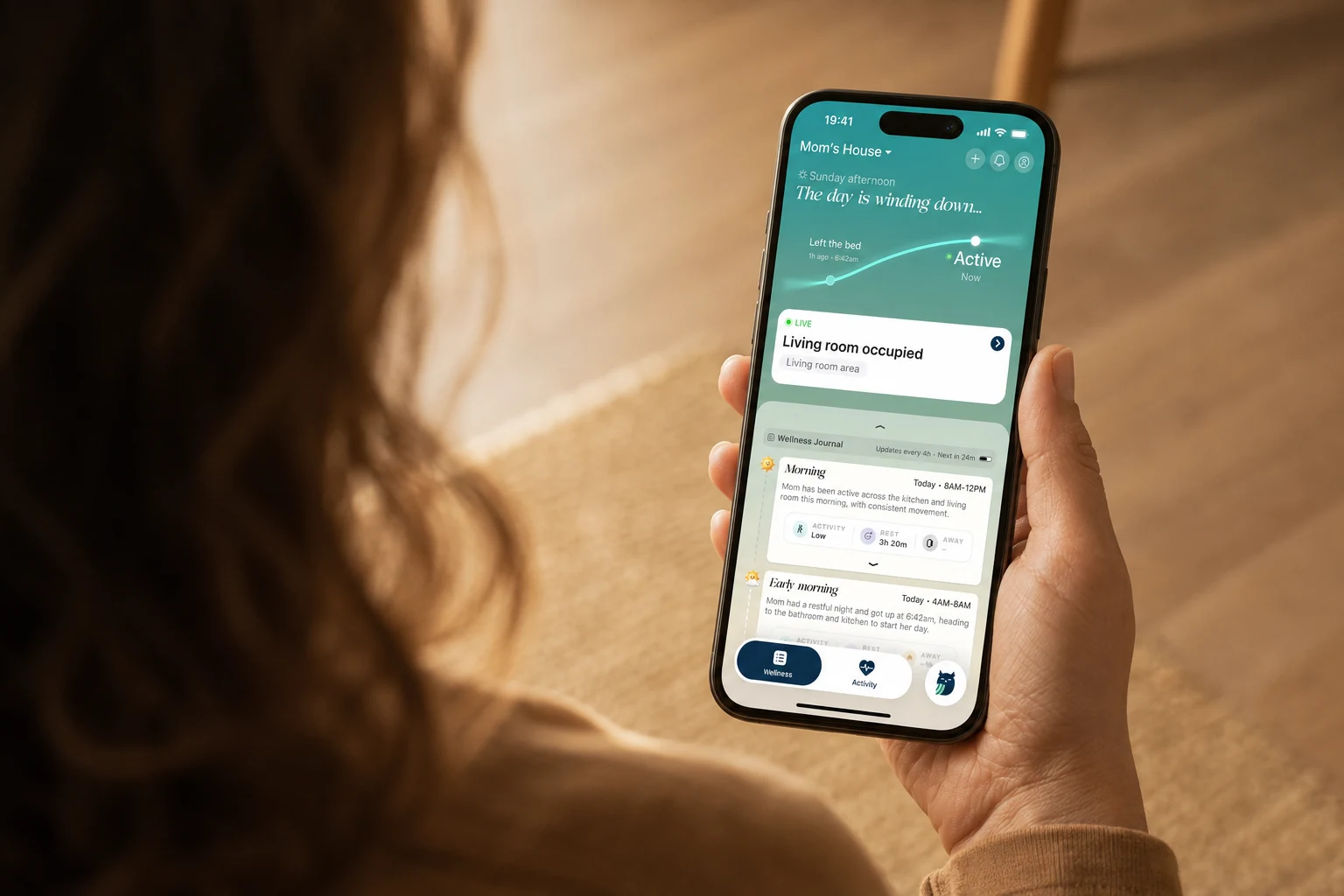
How to monitor an elderly parent remotely
Every way to stay aware from a distance, from daily calls to radar, and the privacy trade-off each one makes.
Aging in place technology: a family's guide
The four main options and their trade-offs, in one page.
See how Silvie works
A small sensor on the wall that detects falls and shows daily activity. No cameras, no wearables.
Explore Silvie