
Guide
Early dementia at home: the safety questions
 Silvie Team·6 min read
Early dementia adds new risks at home. A fall is one of them. Your parent may also get confused, be up at 4am, or forget to call for help. Some families tell us their parent looked scared and unsure where they were.
Why the usual tools fall short here
- A button they won't press. An alert pendant only helps if the person remembers it, is wearing it, and thinks to use it. In a confused moment, none of that is reliable.
- A phone they leave behind. Location tracking assumes the phone is on them. It usually isn't, and asking someone with memory loss to keep it charged and carried is asking a lot.
- Alarms they may not hear. If your parent has hearing loss, they may not hear an alarm or the phone ring.
A pendant or a phone only helps if your parent remembers to use it. With dementia, they often don't.
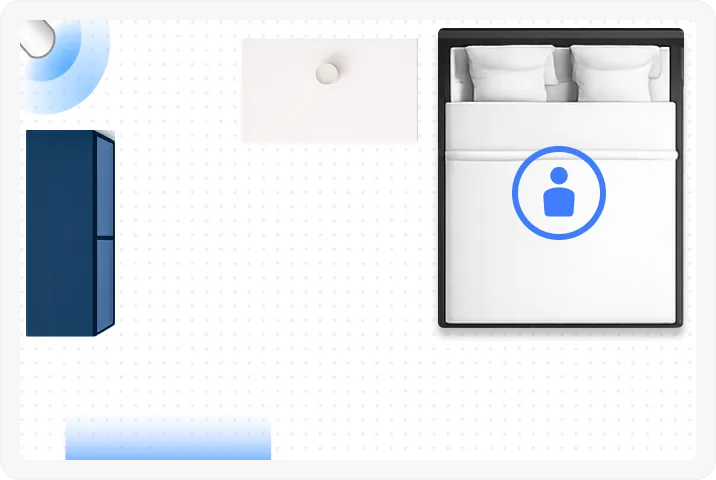
How a wall sensor can help
A small sensor on the wall needs nothing from your parent. There is nothing to wear, carry or charge. It detects falls. Its history may show changes, like getting up more often at night or starting the day later. It is not a medical device, and it does not replace care. It shows your family the daily routine for the hours you can't be there.

When a parent lives alone overnight
The hours you can't cover are the riskiest.
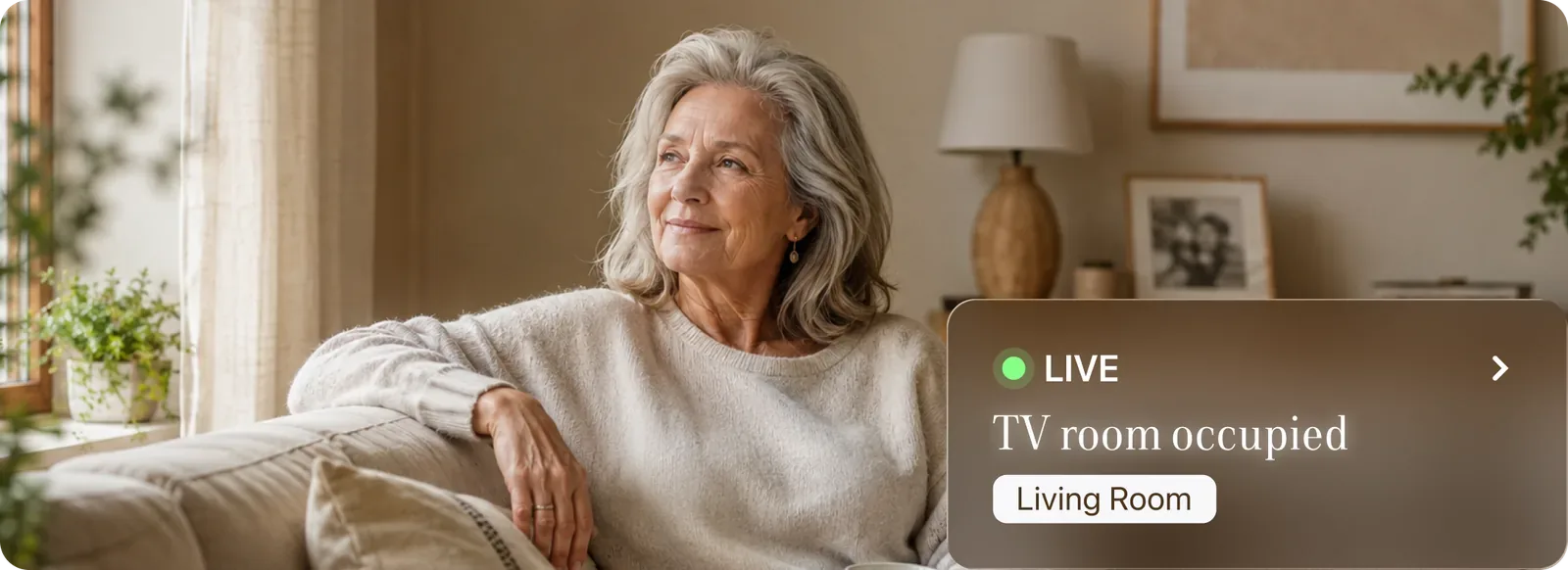
Is my parent being watched?
The privacy question, answered honestly.
What is fall detection, and how does it work?
Pendants, wearables, cameras, and radar, how each detects a fall, what happens after one, and how to choose.

Aging in place technology: a family's guide
The four main options and their trade-offs, in one page.
See how Silvie works
A small sensor on the wall that detects falls and shows the daily routine. No camera, nothing to wear.
Explore Silvie