Radar vs camera
Watch over your parent. Without watching them.
Both can spot a fall. Only one does it without putting a camera in your parent's bedroom.
Both can spot a fall. Only one does it without putting a camera in your parent's bedroom.
Where radar and cameras diverge for in-home senior monitoring.
| Silvie radar | Camera | |
|---|---|---|
| No images or video captured | Yes | No |
| Works in full darkness | Yes | Limited |
| Suitable for the bathroom | Yes | No |
| Detects a fall automatically | Yes | Yes |
| Nothing to feel watched by | Yes | No |
| Option | Best at | The gap Silvie fills |
|---|---|---|
| Medical alert pendant / watch (e.g. Medical Guardian) | Help out in the community, GPS location | Only works if it is worn and charged. Most falls happen at home, at night, when it is on the nightstand. |
| Wearable rings / bands (e.g. Oura) | Sleep and activity trends | Has to be charged and worn every day. Not built to call for help in a fall. |
| Phone location sharing | Knowing where they are when they carry it | The phone gets left on the kitchen counter. No help if they cannot reach it. |
| Indoor cameras | A live picture | Most parents will not accept a camera in the bedroom or bathroom, exactly where falls happen. |
| Silvie (contactless radar) | In-home coverage of the rooms falls happen in, no camera, nothing to wear | — |
Most nights, nothing happens. That is the point. Silvie watches the ordinary rhythms of the day. Did they get up this morning. Are they moving through the house. Did they sleep through the night. A quiet morning becomes proof they are okay, not a guess.
Families tell us the overnight hours were the hardest part. No way to know if a parent living alone was alright between bedtime and breakfast. Silvie closes that window without a camera, without anything to wear, and without a 6am phone call to check.
A camera records images of your parent in their most private moments. Radar doesn't. It senses movement and presence without ever capturing a picture, so the bedroom and bathroom stay private. That difference is often what makes an aging parent say yes at all.
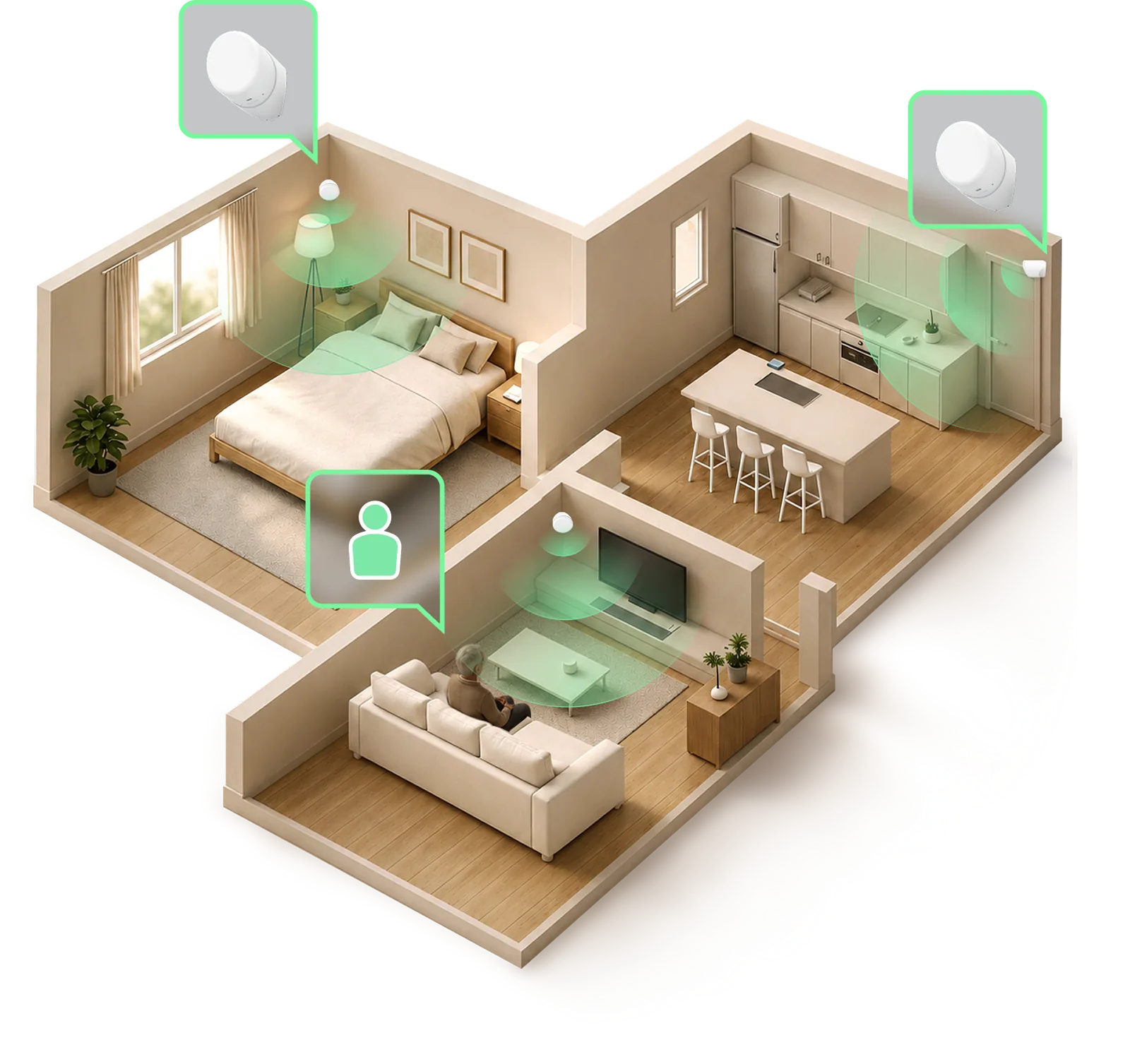
Most serious falls happen at night or in the bathroom. Cameras struggle in low light and are a non-starter in a bathroom. Radar works in complete darkness and through steam, covering exactly the rooms where the risk is highest.

A pendant only helps if your parent is wearing it and can press the button. Silvie is mounted on the wall and works passively in the background, so there's nothing to remember.
"The privacy of a sensor, with the awareness of a camera."
It is radar, not a camera. Silvie senses movement and breathing patterns in a room. It never captures an image and never records sound. Families tell us this is the fact that makes a parent comfortable having a sensor in the bedroom.
Silvie runs in the background with nothing for your parent to wear, charge, or remember. There is no button to press and no daily task. It is there to help them stay in their own home longer, not to take over their day.
A three-room setup takes about twenty minutes. The sensors mount on the wall and there is nothing to wire. If you would rather not do it yourself, we will walk you through it.