
Guide
Keeping an aging parent safe at home
 Silvie Team·6 min read
Most parents want to stay in their own home, and most families want that for them too. The question is how to make the home safer. A lot of it is not technology at all. Small, cheap changes can lower the risk of a fall.
Families tell us the change usually starts after a scare, not a plan. A near-fall, an ER trip, a parent found on the floor. After that, the questions get practical, and this is where they usually begin. Go through the home once, room by room.
Floors and paths
Remove loose rugs or tape them down. Clear cords and clutter from walking routes. Most important: keep the path from bed to bathroom clear. People walk it half-asleep in the dark.
Light
Put night lights in the bedroom, the hallway, and the bathroom. Motion-activated ones are better, because your parent does not have to find a switch. Good light at night can remove one common cause of falls.
Bathroom
Grab bars at the toilet and in the shower. A non-slip mat. A shower chair if standing for long is tiring. The bathroom has hard surfaces and water in a small space. Start there.
Stairs and reach
Handrails on both sides of the stairs, high-contrast tape on the edges, nothing stored on the steps. Move everyday items to waist height, so your parent does not climb on a chair or bend low to reach a plate.
These changes lower the risk. They can't tell you if a fall happens.
What the checklist can't do
You can lower the risk of a fall, but not to zero. And you cannot be in the house at 3am. What families fear most is a parent hurt and alone for hours.
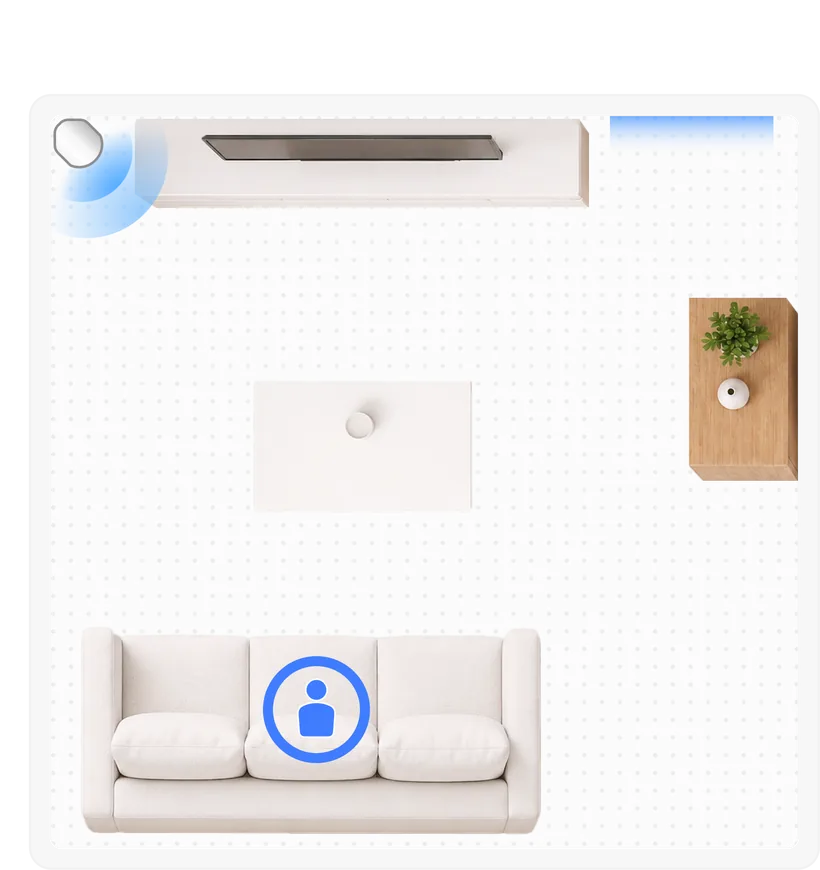
Silvie helps here. It is a small sensor on the wall that detects falls and shows daily activity. There is no camera, and nothing for your parent to wear. The sensor is designed to detect a fall in the room where it is installed, including at night. If it does, your family gets an alert in the Silvie app. No system detects every fall.
What is fall detection, and how does it work?
Pendants, wearables, cameras, and radar, how each detects a fall, what happens after one, and how to choose.
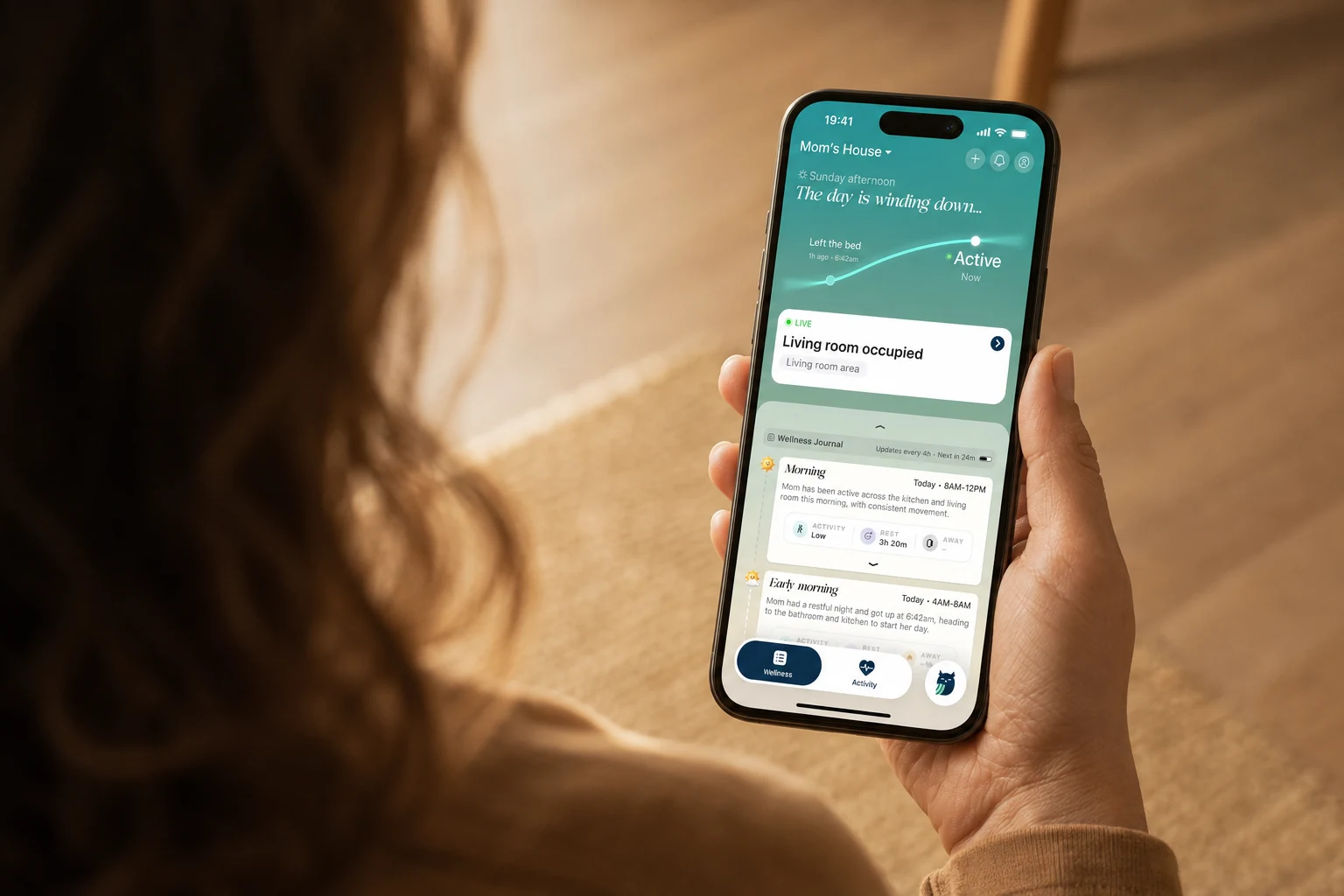
How to monitor an elderly parent remotely
Every way to stay aware from a distance, from daily calls to radar, and the privacy trade-off each one makes.
See how Silvie works
A small sensor on the wall that detects falls and shows daily activity. No cameras, no wearables.
Explore SilvieCommon questions
What's the single most effective thing I can do first?
Do the home-safety pass: clear walking paths, add night lights, put grab bars in the bathroom, and secure the stairs. It costs little, requires no conversation about monitoring, and directly targets falls.
My parent refuses a camera. Are they being unreasonable?
No. Refusing to be filmed at home is a reasonable line, and it doesn't have to end the safety conversation. Pendants, motion sensors, and radar sensors all work without capturing images. Choose one without a camera, and many parents stop objecting.
What's unique about Silvie?
Silvie uses radar to detect falls and daily activity completely privately, with no cameras, microphones, or wearables required. It combines wellness insights and fall detection in one simple system designed specifically for aging at home.
How hard is Silvie to set up?
Most families set it up themselves. Mount the sensor, plug it into a wall outlet, connect to Wi-Fi, and follow the app. No electrician or installation wiring is needed.